
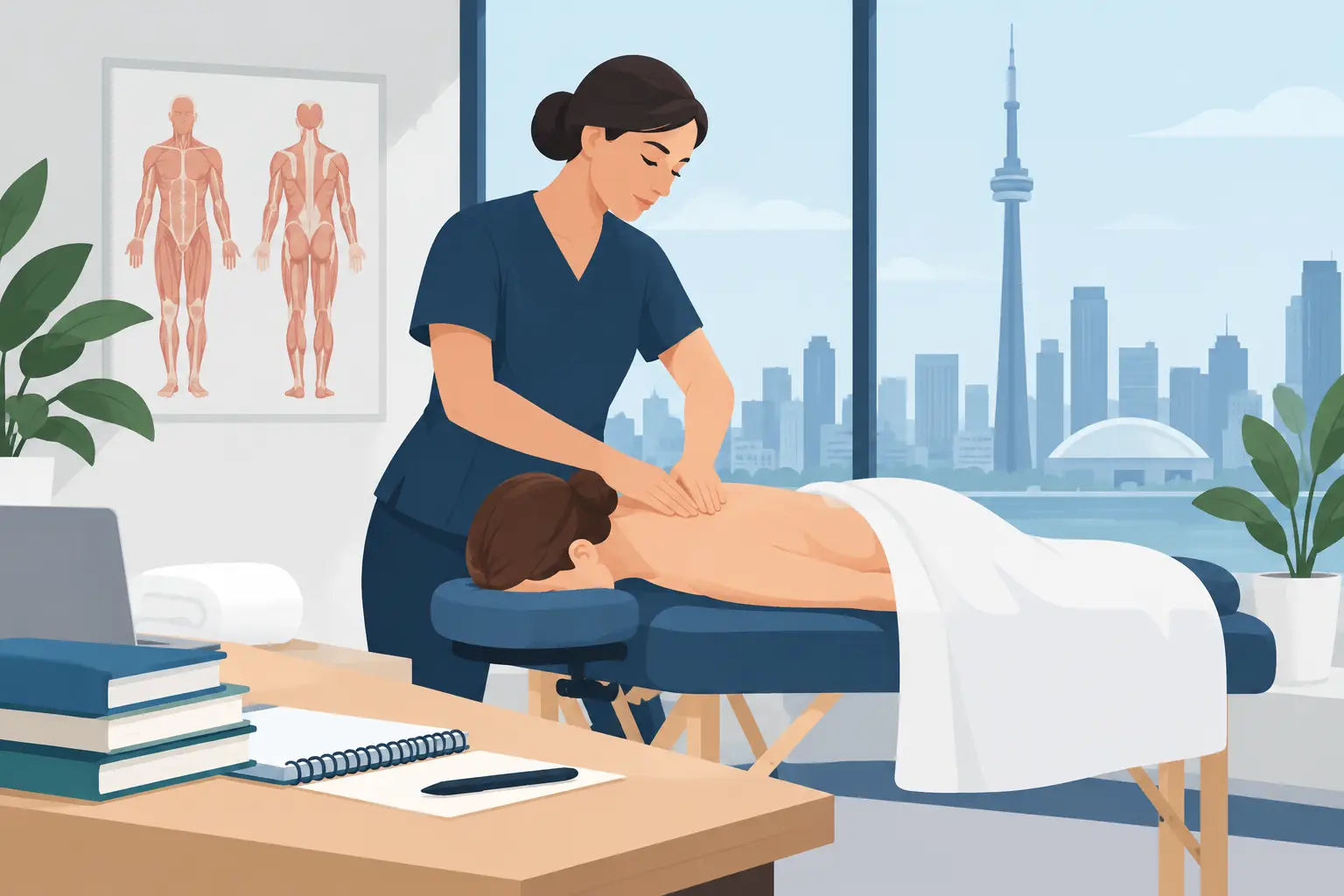
Choosing an rmt school Toronto students can reach comfortably is about more than finding a nearby campus. You are choosing the environment where you will build clinical judgment, hands-on technique, communication skills, and the professional confidence needed to begin a new career. For prospective massage therapy students, the right program should make the path feel demanding but achievable, with meaningful support at every stage.
Registered Massage Therapy is a regulated profession in Ontario. That makes your education especially significant. A strong career-training experience should help you develop the practical discipline, client-centered mindset, and foundational knowledge expected in a professional clinical setting – not simply teach a collection of massage techniques.
What an RMT School Toronto Program Should Prepare You to Do
Massage therapy training is for people who want to work directly with clients, assess their needs within their scope of practice, and provide thoughtful, professional care. Your training must therefore bring together theory and repeated practical application.
Expect to study subjects that support safe, informed practice, such as anatomy, physiology, pathology, assessment, treatment planning, therapeutic massage techniques, professional ethics, and communication. These subjects matter because every client interaction calls for more than a routine approach. You need to listen carefully, take a relevant health history, use sound judgment, document appropriately, and adapt your techniques to the individual in front of you.
The academic side of the program gives you the language and knowledge to understand the body. Practical training is where that knowledge becomes usable. As you progress, you should have frequent opportunities to practice positioning, draping, palpation, assessment approaches, treatment techniques, and client communication under qualified supervision.
A program that treats practical learning as an occasional add-on can leave students feeling unprepared. One that builds structured practice into the learning experience helps students gain comfort through repetition, feedback, and correction.
Hands-On Training Builds Career Confidence
The transition from learning a technique to using it professionally can feel intimidating. That is why hands-on instruction should be central to your decision, not a feature buried in a brochure.
At Elite College of Business and Healthcare, students benefit from career-focused education shaped around practical skills development. Learning alongside certified industry professionals gives students the chance to ask questions in the moment, refine their body mechanics, and understand why a technique or assessment approach is appropriate.
Practical training also develops the habits that clients notice. You learn how to welcome someone into the treatment space, explain what to expect, protect privacy, maintain a professional presence, and respond calmly when a session does not go exactly as planned. Those details can influence whether a client feels respected and comfortable.
Training with real models and clients in an appropriately supervised practical environment can add another layer of readiness. It asks you to apply your education with people who have different goals, communication styles, and levels of comfort. That experience cannot be replaced by theory alone.
Look Beyond the Course List
When comparing an RMT school Toronto-area students may consider, course names tell only part of the story. Two programs may cover similar topics on paper while offering very different learning experiences.
Ask how often students practice hands-on skills and how feedback is delivered. Find out who teaches the program and what current professional experience instructors bring to the classroom. Ask about the equipment, treatment spaces, student support, and the expectations for attendance and study outside class.
It is also useful to look at how the school approaches career readiness. A massage therapy career involves client relationships as well as clinical skills. Professional communication, time management, recordkeeping, customer service, basic marketing awareness, and an entrepreneurial mindset can be valuable whether you hope to join an established clinic or eventually create an independent practice.
The most suitable program depends on your circumstances. Some students want an accelerated route into a new field and are prepared for a focused schedule. Others need to balance study with family obligations or work. Be honest about the time, energy, and financial commitment you can make. Admissions guidance should help you understand the fit before you enroll.
Why Supervised Practice Matters
Many prospective students picture massage therapy training as learning a sequence of movements. In reality, professional practice requires observation, communication, adaptation, and self-awareness.
Supervised practice gives you room to make mistakes while you are still learning. An instructor can help you adjust your pressure, protect your posture, improve a client explanation, or think through a treatment decision. That immediate coaching can prevent small habits from becoming difficult to change later.
It also helps you build professional confidence gradually. Your first assessment, client conversation, or treatment plan may feel unfamiliar. With practice, the process becomes more organized. You begin to see how anatomy, client goals, safety considerations, and communication come together in a real appointment.
Confidence should not mean acting as though you know everything. In healthcare-focused work, confidence means recognizing your responsibilities, working within your training, asking thoughtful questions, and putting client well-being first.
Prepare for the Commitment, Not Just Enrollment
A career change can be exciting because it represents more independence and a clearer direction. It can also require adjustment. Massage therapy education involves reading, studying, practical sessions, assessments, and the willingness to receive constructive feedback.
Before applying, think about what motivates you. Maybe you want a people-focused career after years in another industry. Maybe you are drawn to healthcare and wellness but want a practical, skill-based educational path. Maybe you want to build toward a business of your own. A clear reason for enrolling can keep you focused when the workload becomes challenging.
You should also be prepared to practice professionally from the start. Arriving on time, maintaining a neat appearance, communicating respectfully, and taking feedback seriously are not small details. They are part of the professional identity you are building during school.
Questions to Ask Before You Apply
A campus visit or admissions conversation should leave you with practical answers, not vague promises. Ask how the program balances classroom learning with hands-on practice, what support is available when coursework becomes difficult, and how instructors guide students through practical skill development.
You can also ask about entry requirements, program schedules, tuition and financial-aid guidance, and any regulatory or examination expectations relevant to the path toward registration in Ontario. Requirements can change, so it is wise to confirm current details directly with the school and the appropriate regulatory sources before making your decision.
If you are an international student, ask about the specific admissions process and documentation required for your situation. If you are returning to school after time away, ask what academic and personal support can help you regain your study rhythm.
Your Next Career Step Can Start Here
The right massage therapy program should challenge you, support you, and give you repeated opportunities to turn knowledge into skill. You deserve training that treats your goals seriously and helps you build the habits of a capable, client-focused professional.
Ready to begin your journey? Speak with the admissions team, ask the questions that matter to you, and take a closer look at the hands-on learning environment. Your career starts with the decision to prepare for it with purpose.