
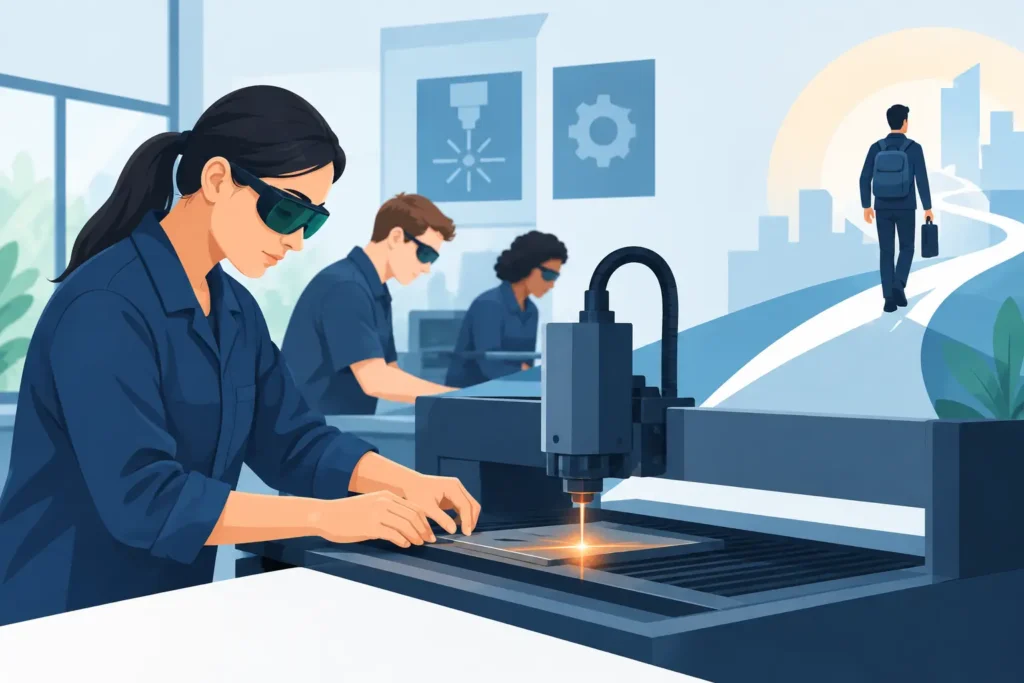
A laser career is not built by watching demonstrations from the back of a classroom. It is built by learning how to prepare a treatment space, communicate with clients, understand safety protocols, assess skin concerns, and perform procedures with confidence under qualified supervision. For prospective students comparing laser schools, the quality of practical training should be one of the first questions to ask.
Laser technology can create an exciting path within medical aesthetics, but the field calls for more than an interest in beauty. Employers and clients value professionals who are prepared, attentive, technically capable, and comfortable delivering a polished client experience. The right career training program helps you develop those skills before you begin applying for opportunities.
What to Look for in Laser Schools
Not all laser schools offer the same learning experience. A program may cover the theory behind aesthetic technology, but theory alone does not prepare you for the pace, expectations, and client interaction involved in a professional setting.
Look for training that connects technical knowledge to real workplace responsibilities. That includes understanding treatment preparation, sanitation practices, skin and hair basics, consultation procedures, contraindications, aftercare communication, and professional documentation. A strong curriculum should also help you understand the role of client comfort, privacy, and clear communication during every appointment.
Just as important, ask how much hands-on practice is included. Learning on equipment in a supervised environment gives students the chance to turn classroom concepts into repeatable habits. Practical experience can also make the transition from student to entry-level professional feel far more manageable.
Certified instructors make a practical difference
Laser education is highly detail-oriented. Students benefit from instructors who can explain not only what to do, but why each step matters. Certified industry professionals can help you build sound habits around client consultation, treatment setup, safety, and professional conduct.
The most useful instruction is direct and constructive. When an instructor observes your technique, answers questions in the moment, and helps you correct errors early, you gain a clearer understanding of the standards expected in the field. This type of guidance supports confidence without suggesting that learning ends at graduation. Technology, protocols, and workplace expectations can evolve, so a strong foundation matters.
Why Hands-On Laser Training Matters
A laser technician’s work requires care, consistency, and attention to detail. Reading about a procedure is different from preparing for it, communicating with a model, working within a treatment plan, and completing post-treatment steps under supervision.
Hands-on training gives students space to practice the full client journey. You learn how to welcome a client professionally, review relevant information, prepare the room, follow appropriate procedures, and provide clear aftercare guidance. These are the moments that shape a client’s experience and an employer’s confidence in a new hire.
At Elite College of Business and Healthcare, applicable medical aesthetics training is supported by a practical learning environment where students can build experience with real models and clients under appropriate supervision. This helps students connect technical technique with the service, communication, and professionalism expected in a medi-spa setting.
Real-client practice also reveals why adaptability matters. Every client interaction is different. Some clients ask detailed questions, some feel nervous, and some need additional reassurance about the process or aftercare. Practicing these conversations while still in school can help students develop a calm, professional approach before they enter the workforce.
Build Skills Beyond the Treatment Room
A career-focused laser program should prepare you for more than performing a service. Medical aesthetics professionals often work in environments where client retention, presentation, scheduling, retail awareness, and team communication matter every day.
That is why business and client-relations training has real value. Knowing how to explain a service clearly, maintain professional boundaries, respond to concerns, and contribute to a positive client experience can strengthen your workplace readiness. For students who may eventually want to build an independent business, an understanding of marketing and entrepreneurship can also be useful.
Technical ability remains central, but it is only one part of professional success. A graduate who can deliver attentive client care, follow protocols, communicate effectively, and represent a workplace professionally is better positioned to pursue opportunities in medical spas, wellness settings, aesthetic clinics, and related environments.
Choose a program that reflects your goals
Your ideal training path depends on what you want from your next career. If you are drawn to advanced beauty services and skincare, a Medical Esthetics or Laser Technician program may be a natural fit. If you want broader skills across the beauty industry, you may also be interested in Makeup Artistry or other complementary training.
Before enrolling, consider the pace of the program, the practical components, the instructor qualifications, and the type of environment where you hope to work after graduation. Ask admissions staff how training is structured and what support is available as you make your career decision. The right questions can help you choose a program that fits both your current schedule and your longer-term ambitions.
A Career Change Can Start Sooner Than You Think
Many students consider laser training because they are ready for a more hands-on, people-focused career. Some are entering the workforce for the first time. Others are balancing family responsibilities, returning to school, or looking for a second career that feels more aligned with their interests.
An accelerated career college program can offer a focused route to new skills without requiring years of unrelated study. That does not mean the work is effortless. Developing professional technique takes concentration, practice, and a willingness to accept feedback. Yet for motivated students, a structured program can turn a career goal into a clear plan.
A supportive school environment matters throughout that process. From admissions guidance to practical instruction, students should feel encouraged to ask questions, refine their skills, and keep moving forward. Financial aid guidance may be available for eligible students, and certain programs may have additional options depending on individual circumstances. The admissions team can help you understand the details that apply to your chosen program.
Prepare for the Professional You Want to Become
When comparing laser schools, focus on what you will be able to do when training is complete. Can you explain the purpose of a consultation? Can you create a professional, comfortable experience for a client? Can you follow safety and sanitation procedures carefully? Can you speak with confidence about aftercare and client expectations?
Those abilities are developed through education that treats practical experience as a central part of learning, not an afterthought. A career-oriented curriculum, guidance from certified professionals, and supervised practice can help you build skills that feel relevant from your first day in the field.
If you are ready to turn your interest in medical aesthetics into focused career training, consider the Laser Technician program at Elite College of Business and Healthcare in Markham. Your career starts with the decision to train with purpose. Apply today and take the next step toward becoming a skilled, client-focused aesthetics professional.