Diploma Program · Healthcare
Massage Therapy Diploma (Pending Accrediation)
Real Skills. Real Clients. Real Results.
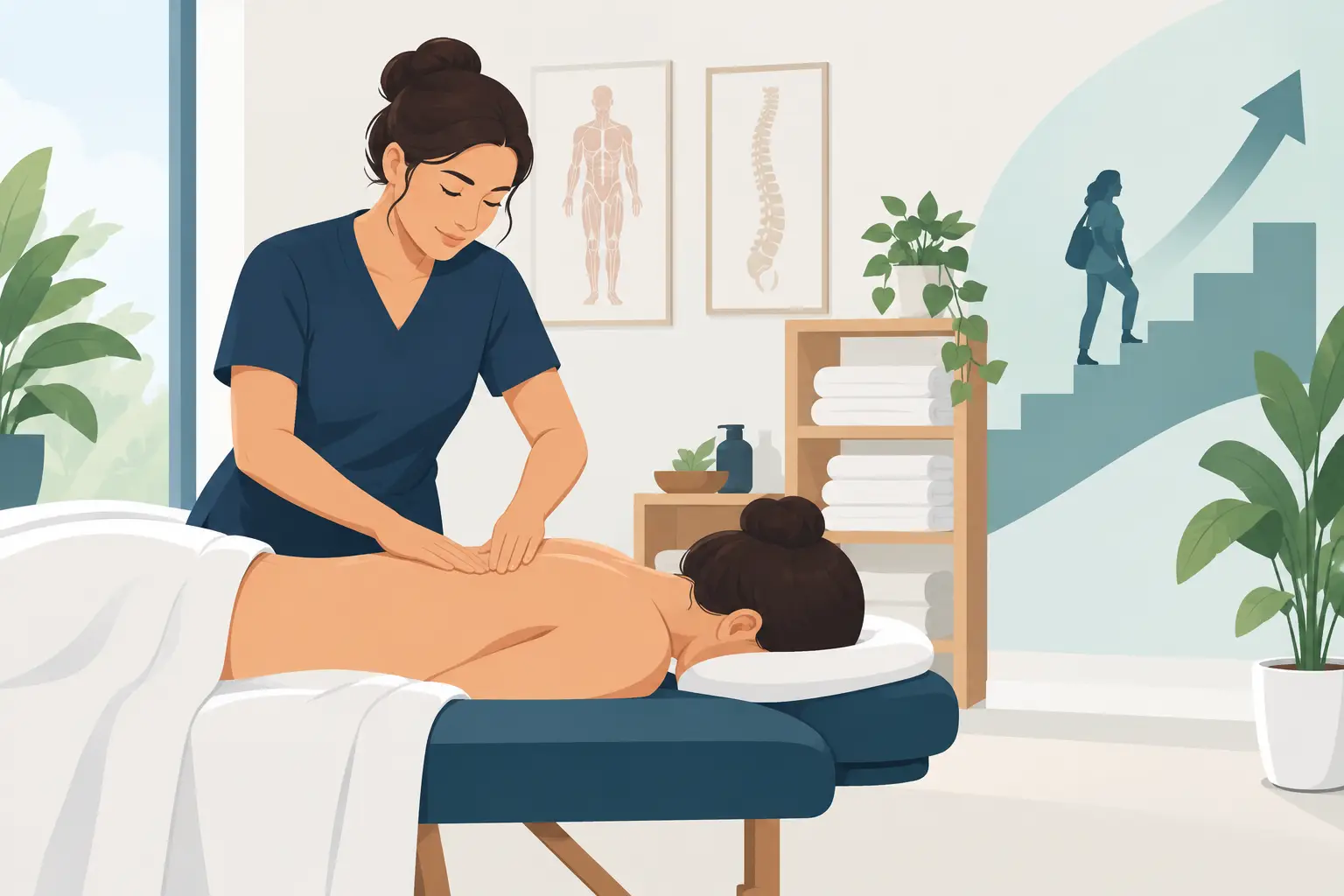
Pursue a fulfilling, in-demand healthcare career with Elite College’s Registered Massage Therapy (RMT) Diploma program. Designed to meet the rigorous standards required for massage therapy practice in Ontario, this program provides thorough training in anatomy, physiology, pathology, and a wide range of massage modalities including Swedish, deep tissue, sports massage, and therapeutic techniques.
78 Weeks
Duration
Hybrid + Clinical
Delivery
Diploma
Credential
Pending Accreditation
Status

About the Program
Start Your Career in Massage Therapy
Students complete extensive supervised clinical hours, developing the hands-on skills and clinical judgment needed to assess and treat clients safely and effectively. The curriculum also covers ethics, professional practice standards, and business fundamentals for therapists planning to work in clinics or start their own practice. Registered massage therapists are in steady demand across Ontario’s healthcare, wellness, sports medicine, and spa sectors, offering graduates strong career flexibility and earning potential.
Elite College’s experienced faculty and hands-on clinical training model ensure students graduate with the confidence and competency to pursue registration and enter the field prepared. Flexible program schedules and financial aid options make this program accessible to career changers, including those exploring healthcare through Ontario’s Second Career initiative. If you’re looking for a hands-on career that combines healthcare, wellness, and helping others feel their best, Elite College’s Registered Massage Therapy Diploma is the ideal starting point.
Important Program Status
Massage Therapy Diploma (Pending Accreditation)
This program is currently pending accreditation. Students will be supported throughout the process and guided toward meeting all licensing requirements.
Your Pathway to RMT
Preparing You for a Regulated Profession
To become a Registered Massage Therapist (RMT) in Ontario, you must successfully complete the certification exams from the College of Massage Therapists of Ontario (CMTO). We guide students through this pathway so you are fully prepared.
What You'll Learn
Clinical Knowledge + Practical Skills
You will develop both the clinical knowledge and the practical skills that clinics are looking for.
Anatomy & Physiology
A foundational understanding of the human body, its systems, and how they function.
Pathology for Massage Therapy
Conditions affecting the skin, musculoskeletal, nervous, and systemic functions of the body.
Massage Techniques & Modalities
From foundational massage to lymphatic drainage, fascial techniques, and sports massage.
Clinical Assessment & Treatment Planning
Postural analysis, range of motion, orthopedic tests, and building effective treatment plans.
Hydrotherapy & Rehabilitation
Hot & cold applications, contrast therapy, remedial exercise, and rehabilitation methods.
Neurology & Pharmacology
The nervous system, neurological conditions, and how medications affect treatment.
Professional Communication & Ethics
Client relationships, informed consent, boundaries, and trauma-informed care.
Client Care & Documentation
Comprehensive client care and accurate SOAP documentation in a clinical setting.
Program Outline
Courses You’ll Complete
Tap any course to see what it covers.
Anatomy & Physiology 1
This Anatomy and Physiology course provides a foundational understanding of the human body, its systems, and their functions, specifically tailored for students pursuing a Massage Therapy Diploma Program. The course is designed to equip learners with the scientific knowledge necessary to comprehend the physical and chemical processes underlying human health and body mechanics.
Anatomy & Palpation 1
This course provides in-depth training in human anatomy, osteology, and palpation techniques relevant to massage therapy. Students will explore anatomical terminology, joint structures, muscular functions, and advanced palpation methods to develop a comprehensive understanding of body mechanics.
Anatomy & Physiology 2
This course continues the anatomy and physiology topics started in the level 1 class. Topics include stress, thermoregulation, cardiac muscle, circulation and hemodynamics, control of circulation, the lymphatic system, immunity and the renal system.
Anatomy & Physiology 3
This is a third term course and continues the study of the body systems and in the second part, introduces essentials of microbiology, pathogenic micro-organisms and public health. It is divided into two parts – Part One: Respiratory Physiology and Part Two: Microbiology and Public Health.
Massage Theory & Techniques
This course provides students with a comprehensive understanding of massage theory, techniques, and body mechanics. It covers different client groups, specialized massage techniques, and the effects of massage on the body. Practical applications include seated massage, lymphatic drainage, fascial techniques, and sports massage, ensuring students develop both foundational and advanced skills in massage therapy.
Professional Development & Human Relations 1
This course is designed to develop communications skills to prepare the student to deal with the client/therapist relationship, ethically and professionally. Course Activities: Lectures, role playing, discussions, participation, exercises, take home assignments.
Anatomy & Palpation 2
This course expands on the fundamental principles of anatomy and palpation, with a focus on the cardiovascular, respiratory, gastrointestinal, urinary, and reproductive systems. Students will enhance their ability to identify anatomical structures through both theoretical knowledge and hands-on practice, reinforcing palpation techniques and clinical assessment skills.
Anatomy & Physiology 4
This course provides an advanced study of human anatomy and physiology with a focus on the digestive system, nutrition, metabolism, and nutrient absorption. Students will explore the roles of nutrients in disease prevention, energy metabolism, and the physiological functions of the stomach, intestines, and accessory organs. The course integrates theoretical knowledge with practical applications to ensure a comprehensive understanding of digestion and nutrient utilization.
Endocrinology
This course provides an in-depth exploration of the endocrine system, focusing on hormone chemistry, secretion control, and physiological functions. Students will study key glands, their secretions, and the hormonal regulation of pregnancy, metabolism, reproduction, and homeostasis. Clinical applications related to endocrine disorders will also be discussed.
Health & Safety
This course provides students with an understanding of essential health and safety principles in public health, microbiology, workplace hazardous materials, and community support. Emphasis is placed on developing awareness of infection control, workplace safety regulations, and public health responsibilities in therapeutic and healthcare settings.
Hydrotherapy
This course introduces students to the therapeutic application of water through various hydrotherapy techniques. Students will explore the physical properties of water, its physiological effects, and indications & contraindications for treatment. The course covers general hydrotherapy treatments, hot & cold applications, contrast therapy, and rehabilitation methods. Through theoretical learning and hands-on practical sessions, students will develop competency in clinical hydrotherapy assessments, treatment planning, and the application of therapeutic water-based techniques.
Neurology 1
This course explores the fundamental concepts of neurology, including the anatomy and physiology of the spinal cord, brain structures, and nervous system pathways. It covers embryological development, functional areas of the cerebral cortex, blood supply to the brain, and protective coverings. Students will gain an in-depth understanding of the central nervous system (CNS) and its functional components essential for therapeutic and healthcare applications.
Neurology 2
This course explores the neurological pathways, plexuses, and spinal cord injuries in detail. Students will study the accessory nerves of the sacral plexus, spinal nerves, brachial and lumbar plexuses, nerve root testing, and the impact of cervical spinal cord injuries. The focus will be on clinical applications, diagnosis, and therapeutic approaches in neurology.
Neurology 3
This course provides an in-depth study of the autonomic nervous system (ANS), cranial nerves, and neurological pathologies affecting motor and sensory functions. Students will explore the anatomy, physiology, and clinical significance of cranial nerves, the autonomic nervous system, and pain mechanisms. The course integrates theoretical learning with clinical applications, helping students understand how neurological disorders affect movement, sensation, and autonomic function.
Pathological Treatments
This course provides an in-depth study of pathological conditions affecting the musculoskeletal, nervous, and systemic functions of the body. Students will explore the etiology, clinical manifestations, diagnosis, and treatment of various conditions, with an emphasis on manual therapy, rehabilitative techniques, and therapeutic exercise. The course integrates theoretical knowledge with practical application, ensuring students gain the necessary clinical competency to assess and treat a range of pathologies. The practical component emphasizes hands-on techniques, patient assessment, and evidence-based treatment strategies for improving patient outcomes.
Pathology 1
This course provides students with an in-depth understanding of pathology related to skin conditions, immunity, inflammation, and infections. The course will explore bacterial, viral, and fungal infections affecting the skin, common inflammatory diseases, and other pathological conditions relevant to healthcare and therapeutic practice.
Pathology 2
This course provides an in-depth examination of various pathological conditions affecting the musculoskeletal and nervous systems. Students will explore trauma, fractures, infections, degenerative disorders, tumors, and neurological diseases. Emphasis is placed on understanding disease mechanisms, clinical manifestations, and therapeutic approaches relevant to healthcare professionals.
Physical Assessment
This course focuses on developing the skills necessary to conduct thorough physical assessments, including postural analysis, range of motion testing, orthopedic special tests, and muscle testing. Students will learn how to gather and analyze subjective and objective data to build effective treatment plans, conduct neurologic testing, and formulate comprehensive discharge notes.
Professional Development & Human Relations 2
This course introduces students to professional development and human relations, focusing on interpersonal skills, communication, self-awareness, and workplace professionalism. Students will explore effective work habits, goal setting, boundary setting, understanding different client populations, and trauma-informed care to enhance their ability to provide professional and ethical services.
Remedial Exercise & Kinesiology
This course explores the principles of kinesiology and remedial exercise, focusing on movement mechanics, posture correction, rehabilitation techniques, and exercise program design. Students will engage in practical applications, gaining hands-on experience in assessment, mobilization, and therapeutic exercise techniques.
Research & Pathology
This course explores pathological conditions affecting the gastrointestinal, respiratory, and cardiovascular systems. Students will examine disease processes, diagnostic techniques, and treatment options within these systems. Additionally, the course introduces research methodologies, emphasizing evidence-based practice, literature review, and case study analysis. Through theoretical learning and hands-on practical sessions, students will develop the ability to critically evaluate medical conditions, understand treatment rationales, and apply research findings to clinical practice.
Clinic 1
This course provides students with hands-on experience in a clinical setting, applying the knowledge and techniques acquired in previous coursework. Students will be tested and graded on practical training from the previous semester, ensuring proficiency in assessment, treatment planning, and client interaction within a supervised environment.
Clinic 2
Clinic 2 is a practical, hands-on course designed to refine students’ advanced therapeutic techniques in a clinical setting. Students will engage in real-world client interactions, refining their skills in orthopedic testing, joint mobilization, and specialized assessment techniques. Continuous evaluation will ensure competency in professional practice, patient care, and clinical decision-making.
Clinic 3
Clinic 3 represents the culminating clinical experience in the Massage Therapy Diploma Program. Delivered in a supervised public clinic setting, this practicum provides students with an authentic opportunity to transition from the academic environment into real-world professional practice. Students will engage with members of the public presenting with a wide range of musculoskeletal and systemic conditions, allowing for full integration of theoretical knowledge, practical techniques, assessment skills, clinical reasoning, and professional behavior. Under the direct supervision of licensed massage therapists and instructors, students will conduct comprehensive client assessments, develop individualized treatment plans, apply appropriate massage therapy techniques, and maintain accurate SOAP documentation. Students are also expected to demonstrate competency in communication, informed consent, ethical conduct, interprofessional collaboration, and reflective practice. This course is aligned with the CMTCA Standards of Clinical Education and prepares students to meet the entry-to-practice competencies required by the College of Massage Therapists of Ontario (CMTO).
Pharmacology
This Pharmacology module provides massage therapy students with foundational knowledge of how pharmaceutical agents interact with the human body, as well as the implications these interactions have on massage treatments. Students will explore drug classifications, mechanisms of action, common side effects, contraindications, and routes of administration. Emphasis is placed on identifying conditions where medication impacts treatment planning, safety, and client communication within a professional massage therapy practice.
Ethics & Good Business Practice
This course provides an in-depth understanding of business ethics, accounting principles, contracts, and entrepreneurial strategies essential for professionals in the healthcare and wellness industries. Students will explore financial management, business registration, ethical responsibilities, and professional conduct, ensuring they can successfully start, manage, and sustain a business while adhering to industry standards. Through theoretical learning and practical applications, students will develop competency in financial planning, contract negotiation, resume writing, and business proposal development. The course emphasizes ethical considerations and best practices, integrating real-world case studies.
Advanced Massage Techniques
This course provides students with advanced knowledge and hands-on experience in specialized massage techniques. Students will learn regional work for each area of the body, general treatment principles, swelling reduction techniques, lymphatic drainage, and progressive relaxation techniques. The course aims to enhance competency in performing advanced massage methods across various body regions.
Professional Communication in Massage Therapy 1
This introductory course focuses on developing the communication skills necessary for establishing safe, ethical, and effective therapeutic relationships with clients in a health care setting. Students will learn verbal, non-verbal, written, and listening strategies to support client-cantered care, including SOAP charting, informed consent discussions, and professional conduct. Emphasis is placed on clear documentation, empathetic engagement, and boundaries within therapeutic relationships.
Professional Communication in Massage Therapy 2
This advanced communication course is designed to deepen the interpersonal and professional communication skills required in Massage Therapy practice. Building upon foundational knowledge, students will explore strategies to navigate complex client interactions involving sensitive topics such as trauma, chronic pain, and emotional distress. The course emphasizes effective communication with interprofessional healthcare teams, documentation of clinical encounters, and appropriate responses in urgent or emergency scenarios. Students will also develop competencies in managing professional boundaries, demonstrating cultural sensitivity, and resolving communication conflicts ethically and respectfully. Through case studies, simulated client interactions, and written assignments, students will refine both their verbal and written communication abilities, aligning with regulatory standards and ethical practice expectations.
Why Choose This Program
Why This Program Stands Out
Everything you learn is designed to help you succeed in a real work environment.
Employer-Ready Training
Learn the practical skills clinics are actively looking for, so you can move smoothly into the workforce.
Experienced Instructors
Be guided by industry professionals with real clinical experience who know what it takes to succeed.
Free Exam Prep Workshops
Additional support to help you prepare for certification exams with confidence.
Clinical Experience with Real Clients
Build confidence before you graduate through supervised, hands-on clinical practice.
Small Class Sizes
More support, more attention, better learning.
Entrepreneurship Advantage
Learn how to work independently or start your own practice.
Career Opportunities
Where You Can Work After Graduation
Trained massage therapy professionals are in strong demand across Ontario.
Massage Therapy Clinics
Wellness & Rehabilitation Centres
Spas & Medical Settings
Sports Therapy Environments
Self-Employment / Private Practice
Admissions
Simple & Straightforward Admissions
We keep our admissions process simple and supportive. Here’s what you’ll need to get started.
Requirements
- Ontario Secondary School Diploma or equivalent
- Up-to-date immunization
- Vulnerable sector check
- English proficiency (see options below)
English proficiency — one of the following:
- English is your first and primary language
- Completion of high school in English
- IELTS (GT, AC or One Skill Retake*) with minimum 6.0 Writing, 6.5 Speaking, 7.5 Listening and 6.5 Reading
- *IELTS One Skill Retake must be taken within 60 days of the full IELTS test
Financial Aid
Financial Barriers Shouldn’t Hold You Back
We offer a variety of financial aid programs designed to make your learning journey affordable and accessible. Speak with an Enrollment Advisor to explore the options you’re eligible for.
OSAP
Ontario Student Assistance Program for eligible students.
Better Jobs Ontario
Funding support for eligible career changers.
CTC
Ask our advisors about CTC eligibility.
Flexible Payment Plans
Spread your tuition into manageable payments.
Request Information
Get the Complete Course Outline
Please enter your details below to receive the complete course outline, upcoming start dates and financial aid options.
Request Information
FAQs
Frequently Asked Questions
How long is the Massage Therapy Diploma?
The program runs for 78 weeks.
How is the program delivered?
Hybrid delivery — in-class learning combined with hands-on clinical training.
What credential will I receive?
A Diploma. This program is approved as a vocational program under the ontario career colleges act, 2005.
Is the program accredited?
The program is currently pending accreditation. Students will be supported throughout the process and guided toward meeting all licensing requirements.
How do I become a Registered Massage Therapist (RMT)?
Massage therapy is a regulated profession in Ontario. To become an RMT, you must successfully complete the certification exams from the College of Massage Therapists of Ontario (CMTO). We guide students through this pathway, including free exam prep workshops.
What are the admission requirements?
An Ontario Secondary School Diploma or equivalent, up-to-date immunization, a vulnerable sector check, and English proficiency.
Is financial aid available?
Yes. Options include OSAP, Better Jobs Ontario, CTC, and flexible payment plans for eligible students.
How do I apply?
Click Apply Now or call (905) 554-8882. Seats are limited.
Ready to Begin Your Journey?
Our Admissions team is here to support you and ensure that your academic and career goals become a reality. Contact us today and take the first step towards a brighter future!