
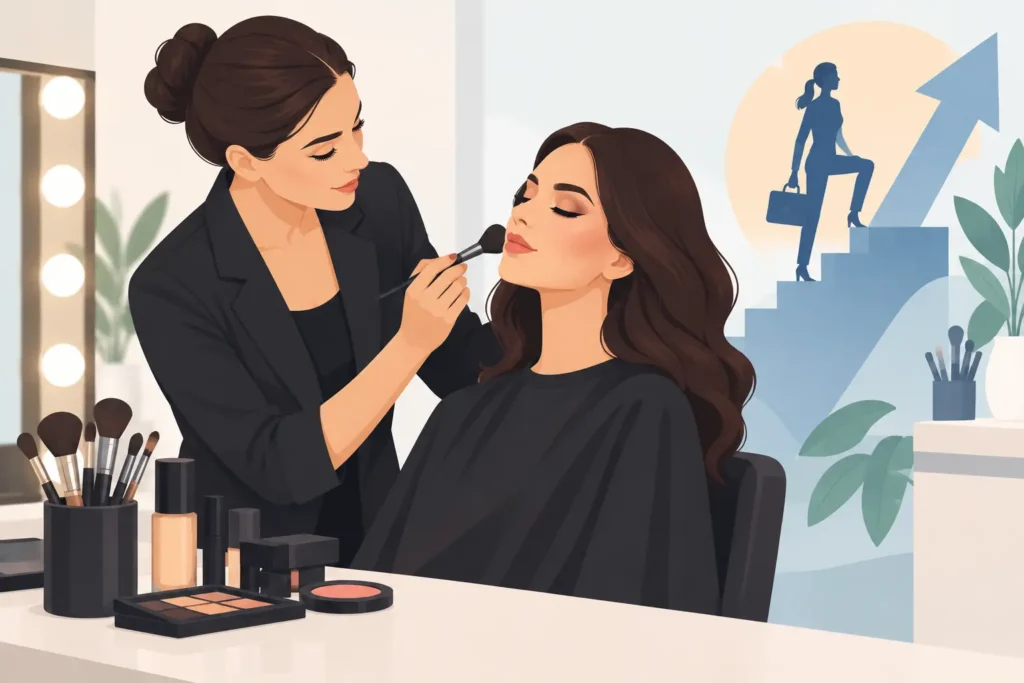
A polished makeup look can take an hour to create. The professional ability behind it takes far more than knowing what products are popular online. A makeup artistry course gives aspiring artists a structured place to build technique, speed, sanitation habits, client communication, and the confidence to work with many faces, skin tones, and occasions.
For people considering a career change, returning to school, or turning a personal interest into professional work, makeup training should feel practical from the start. You need education that prepares you to perform, not simply watch demonstrations. The goal is to graduate with skills you can use in a beauty-focused career and the professional mindset to keep growing.
What a Makeup Artistry Course Should Teach
Strong makeup artists make intentional decisions. They assess skin condition, face shape, undertones, the client’s preferences, lighting, photography, and the purpose of the final look. A bridal application, a camera-ready editorial look, and a natural daytime service each require a different approach.
That is why quality training should begin with a solid technical foundation. Students need to understand skin preparation, hygiene, color theory, foundation matching, blending, corrective techniques, contour and highlight placement, eye makeup, brow shaping, lip application, and lash application. These are not isolated skills. They work together to create makeup that looks balanced in person and holds up throughout an event or photo session.
Just as important, a career-focused program teaches why a technique works. A trending look may inspire a client, but a professional artist needs the judgment to adapt it to the person in the chair. That can mean choosing a softer contour for mature skin, changing product textures for a long event, or adjusting a color palette to complement a client’s natural features rather than covering them.
Hands-On Practice Builds Professional Confidence
Watching a makeup tutorial can introduce an idea. Repeated practice develops control. Students need time to apply what they learn, receive feedback, correct mistakes, and try again under the guidance of experienced instructors.
At Elite College of Business and Healthcare, makeup artistry training is designed around hands-on, in-school practical learning. Working with real models in an appropriate supervised setting helps students move beyond practicing only on themselves or a familiar friend. Every face presents a different learning opportunity: different skin texture, different proportions, different concerns, and different expectations.
This experience matters because client work is rarely predictable. A model may arrive with dry skin, sensitive eyes, sparse brows, or a reference image that needs thoughtful adaptation. Practical training helps students stay calm, assess the situation, explain their recommendations, and create a result that reflects the client’s goals.
Real-model practice also helps build professional pace. New artists often know the steps but need more time to complete them. With consistent guided repetition, students can become more efficient without sacrificing hygiene, precision, or the client experience. Speed should never come before quality, but it becomes increasingly important when working with appointments, events, and busy schedules.
Learning From Industry Professionals
The right instructor does more than show a finished look. Certified industry professionals can demonstrate product control, explain the reasoning behind techniques, and offer specific feedback on how to improve. They can also help students develop professional habits that are easy to overlook when learning alone, such as setting up a clean station, organizing a kit, protecting products from contamination, and communicating clearly throughout an appointment.
Constructive feedback is one of the most valuable parts of in-person career training. It is encouraging to hear what is going well, but it is equally useful to know where a blend needs more softness, a base needs better preparation, or a makeup choice does not suit the intended lighting. This is how technical ability turns into reliable professional work.
Career Skills Matter Alongside Makeup Technique
Makeup artistry is a people-centered field. Clients remember how a service made them feel, not only how it looked in the mirror. A capable artist creates a welcoming, organized experience from consultation through final touch-ups.
For that reason, practical career education should include client relations, communication, marketing, management, and entrepreneurship. These skills support many possible directions in the beauty industry. Some graduates may seek opportunities in salons, spas, cosmetic retail, bridal beauty, special events, or freelance work. Others may want to build a personal client base over time.
The path you choose depends on your goals, experience, and local opportunities. Freelance work can offer flexibility and creative independence, but it also requires self-promotion, scheduling, budgeting, and consistent relationship-building. Working within an established beauty business may provide a more structured environment, while still allowing you to strengthen your portfolio and client service skills.
A career-oriented curriculum helps you prepare for both the artistry and the responsibility. You can learn how to consult with clients, listen to a requested look, set realistic expectations, present yourself professionally, and encourage repeat bookings through dependable service. These are skills that can support long-term progress in almost any beauty role.
Who Can Benefit From Makeup Artistry Training?
You do not need years of experience to begin training. Some students arrive with a strong interest in makeup and want the structure to refine their skills. Others are beginning a second career and want an education that leads toward practical, client-facing work within months rather than years.
A makeup artistry program can also be a strategic choice for students who want a foundation for broader beauty and aesthetics interests. Makeup, skincare awareness, client consultation, sanitation, and visual presentation often complement other paths in the beauty and wellness space. What matters is choosing a program that meets you at your current level while expecting you to grow through practice.
Before enrolling, ask yourself what kind of learning environment will help you succeed. If you learn best by doing, value direct instructor feedback, and want to practice with models rather than only study theory, an in-school practical program may be a strong fit. If your goal is only personal makeup education, a short workshop may be enough. If your goal is career preparation, look for deeper training that treats artistry as both a technical and professional discipline.
How to Prepare for Your Training
The most successful students do not need to be perfect before the first class. They arrive ready to learn, practice consistently, accept feedback, and develop professional discipline. Curiosity and commitment carry more weight than having an extensive makeup collection or a large social media following.
It helps to start observing makeup with a more analytical eye. Notice how a foundation changes in natural light, how brow shape influences facial balance, and why a color combination works on one person but not another. Practice can build familiarity, but formal training gives that practice direction.
You should also be ready to work with people whose preferences differ from your own. A professional makeup artist is not there to repeat one signature look on every client. The work is about listening carefully, applying sound technique, and helping each client feel comfortable and confident.
Begin Building a Career You Can See Yourself In
Makeup artistry can be creative, personal, and highly practical at the same time. It gives you the opportunity to work with people during meaningful moments while developing a skill set that can grow with your ambition. The difference between enjoying makeup and working professionally in the field is often the quality of your training and the volume of guided practice behind it.
A hands-on makeup artistry course can help turn interest into capability through real-model practice, instructor feedback, industry-relevant knowledge, and career-focused skills. If you are ready to build your technique, strengthen your confidence, and take a serious step toward a beauty career, apply today. Your career starts with the decision to begin.