
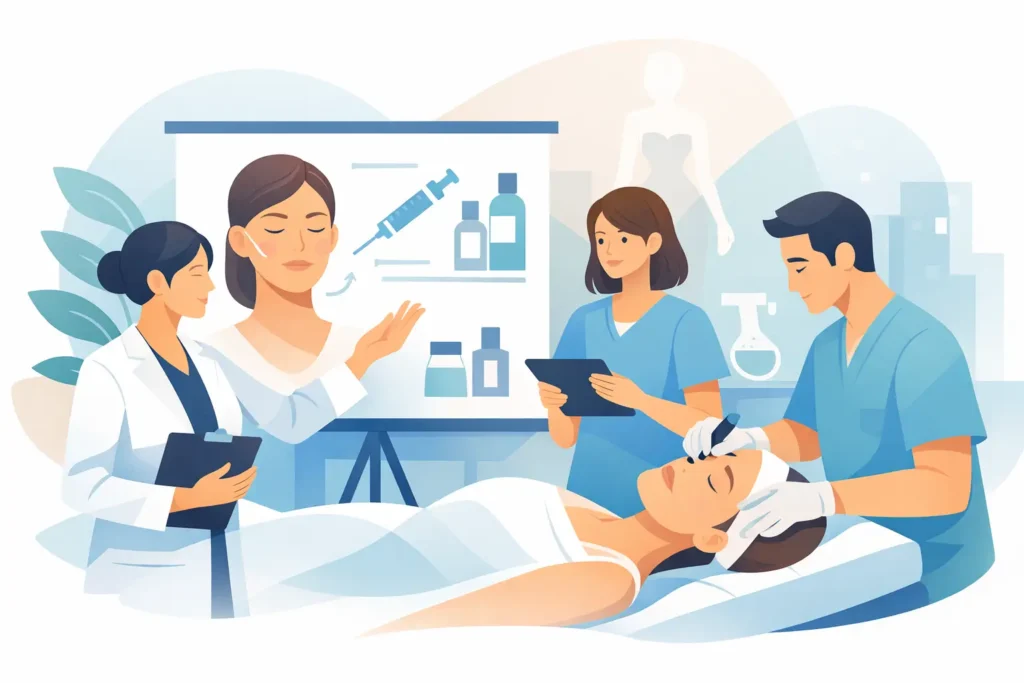
A treatment room can feel very different from a classroom desk. The first time a client asks whether a peel will sting, points out a sensitive area, or arrives late with a full schedule, technical knowledge alone is not enough. Medi spa clinical practice training helps future professionals turn what they know into calm, capable service – the kind that earns trust from the moment a consultation begins.
For students preparing for a career in medical esthetics, clinical practice is where confidence becomes visible. It is where procedures, sanitation, communication, timing, and client care come together under professional supervision. The goal is not simply to complete a treatment. It is to learn how to create a safe, polished experience that makes clients want to return.
Why Clinical Practice Matters in Medical Esthetics
A successful medi spa professional needs more than an interest in skincare or beauty. Employers and clients expect thoughtful consultations, consistent treatment protocols, strong hygiene habits, accurate documentation, and professional recommendations. These skills are difficult to build through lectures alone.
Hands-on training gives students repeated exposure to the full service experience. They learn to prepare the room, welcome the client, assess goals and contraindications, explain the procedure, perform the treatment within their scope of practice, provide aftercare, and reset the space correctly. Each step matters. A beautiful result can be overshadowed by a rushed consultation or unclear home-care guidance.
Clinical practice also teaches judgment. Skin does not respond the same way for every client. A treatment plan may need to change because of sensitivity, medications, recent sun exposure, or a client’s goals. Students learn when to proceed, when to adjust, and when to refer a client to an appropriate medical professional. That judgment protects both the client and the practitioner’s reputation.
What Medi Spa Clinical Practice Training Should Include
Not all practical training offers the same level of preparation. Watching demonstrations is useful, but career-ready learning requires students to perform treatments themselves with feedback from qualified instructors. The strongest programs create a structured clinic environment that reflects the pace and expectations of a professional workplace.
Real Consultations, Not Scripted Conversations
A consultation is often the moment that determines whether a client feels safe. Students need practice asking clear questions, listening without assumptions, recording relevant information, and setting realistic expectations. They also need to explain treatments in language that is informed but easy to understand.
Practice with real models and clients creates valuable variety. One client may be focused on hydration and glow, while another is concerned about congestion, uneven texture, or the appearance of aging. Learning to tailor a recommendation without overpromising is an essential professional skill.
Treatment Technique With Supervised Feedback
Technique improves through repetition. In a clinical setting, students can develop controlled movements, proper product application, safe device handling, and a reliable treatment sequence. Certified instructors can correct small errors before they become habits, helping students understand not only what to do, but why each protocol exists.
Depending on the program and local regulations, practical experience may include advanced facials, skin analysis, exfoliation treatments, microdermabrasion, laser-related procedures, body treatments, and other services within the student’s training and permitted scope. The exact services matter, but the learning standard matters more: every treatment should be performed with safety, professionalism, and client comfort at the center.
Sanitation and Room Readiness
Clients may not know every sanitation standard, but they notice clean linens, organized tools, fresh supplies, and a treatment room that feels cared for. Students should become confident with disinfection procedures, product storage, waste handling, equipment preparation, and between-client reset routines.
These habits are also practical for employment. Busy spas and clinics need team members who can maintain high standards without needing constant reminders. Reliable room readiness helps protect the client experience and keeps appointments running on schedule.
Retail, Rebooking, and Professional Recommendations
Client education is not a sales script. When handled well, it is an extension of care. A practitioner who can explain why a home-care routine supports an in-clinic service provides more value than someone who simply names a product at checkout.
Clinical training should help students recommend appropriate care based on a client’s goals, budget, lifestyle, and skin needs. It should also teach rebooking conversations that feel helpful rather than pressured. A client is more likely to return when they understand what results may take time, consistency, and a personalized plan.
The Difference Between Practice and Career Readiness
Completing a procedure once is not the same as being prepared to perform it in a professional setting. Career readiness comes from repetition, feedback, and learning how to respond when the day does not go exactly as planned.
A client may be nervous. A service may take longer than expected. A consultation may reveal a contraindication that requires the appointment to change direction. These moments test communication and professionalism. Students who have practiced in a supervised clinical environment are better prepared to stay composed and make responsible decisions.
There is also a business side to medi spa work. Whether graduates pursue employment in a spa, clinic, salon, wellness center, or eventually open their own business, they benefit from understanding client retention, service presentation, scheduling, marketing, and teamwork. Technical skills can open the door, but client relationships and business awareness help build a long-term career.
How to Choose a Medi Spa Clinical Practice Training Program
If you are comparing medical esthetics programs, look beyond the course title. Ask how much practical training is included, who supervises students, and whether you will work with a range of models or clients. You should also ask how the program addresses consultations, sanitation, documentation, aftercare, and professional conduct.
The best fit depends on your goals. Someone who wants to join an established spa may prioritize treatment confidence and client service skills. An aspiring entrepreneur may also want business, marketing, and management training. A student interested in advanced technology should confirm that the curriculum includes appropriate education and supervised practice for those services.
It is wise to ask about instructor experience as well. Professionals who understand current industry expectations can offer practical guidance that goes beyond the textbook. Their feedback can help you improve your technique, presentation, and confidence before you begin applying for positions.
At Elite College of Business and Healthcare, students benefit from hands-on, in-school practice in a medi-spa clinic environment, guided by certified industry professionals. That experience is designed to help students move from learning procedures to delivering services with the confidence employers and clients expect.
Building Confidence Before Your First Job
Many new graduates worry about their first day on the job. That is normal. Confidence does not mean believing every treatment will be effortless. It means having a process you can rely on: consult carefully, follow protocols, communicate clearly, and ask for support when needed.
Clinical practice gives students a chance to build that process before their income and reputation depend on it. With each appointment, they become more comfortable greeting clients, adapting to different needs, managing time, and presenting themselves as professionals. The growth is often noticeable not only in treatment results, but in posture, communication, and decision-making.
For career changers, recent graduates, and aspiring wellness professionals, this practical experience can make an accelerated education feel more meaningful. You are not waiting until after graduation to find out what the work is like. You are learning the rhythm of the industry while experienced instructors are there to guide you.
A medi spa career is built one client experience at a time. Choose training that lets you practice the skills behind that experience, receive honest feedback, and step into your next opportunity prepared to make clients feel informed, comfortable, and cared for. Ready to begin your journey? Your career starts with the confidence you build in the treatment room.