
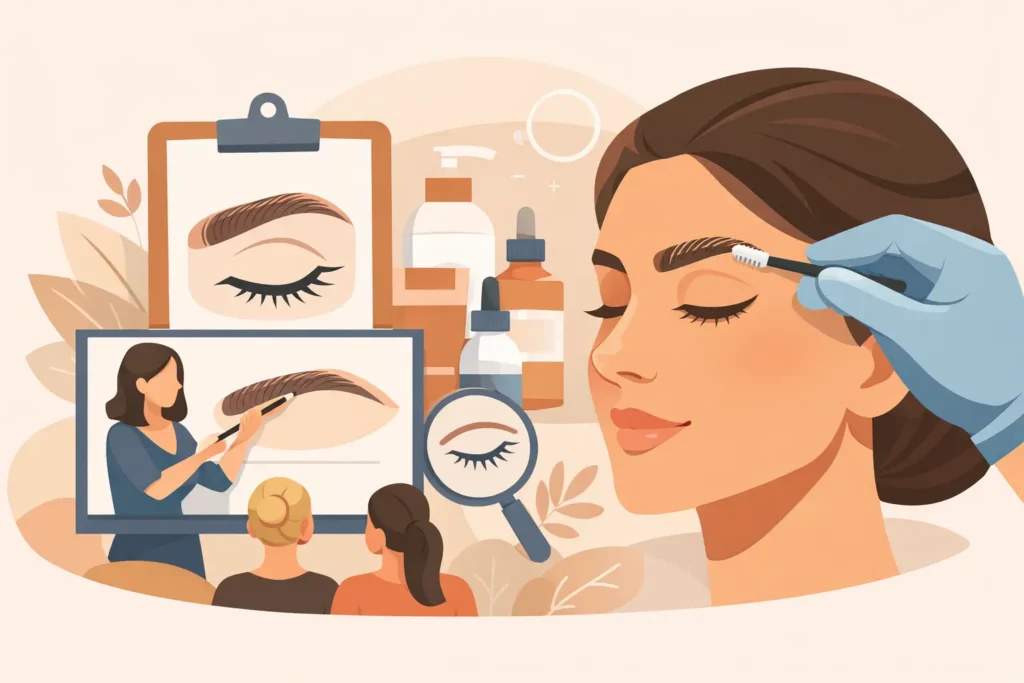
A brow lamination training course can be a practical first step for someone who wants to add a high-demand, polished service to their beauty skill set. The finished look may appear simple – lifted, fuller-looking brows with a defined shape – but delivering it safely and consistently requires more than following a product label. Clients trust you with the delicate skin and hair around their eyes, and that trust is earned through proper training, careful consultation, and hands-on practice.
For aspiring estheticians, career changers, and future beauty entrepreneurs, brow lamination can be an approachable service to learn. It fits naturally alongside brow shaping, tinting, lash services, makeup artistry, and medical esthetics. The right education helps you turn interest in beauty into a skill you can confidently offer in a professional setting.
What a Brow Lamination Treatment Really Involves
Brow lamination is a chemical service that temporarily redirects brow hairs into a more lifted, uniform position. Depending on the client’s natural hair pattern and desired result, the treatment can create a softer brushed-up look, improve the appearance of sparse areas, or make naturally full brows easier to style.
The process generally includes cleansing and preparing the brow area, applying professional solutions in the correct order, setting the hairs into their intended direction, nourishing the brows, and finishing with grooming or shaping where appropriate. Timing, product control, and hair assessment matter at every stage. Leaving a solution on too long, applying it carelessly, or working on unsuitable brows can lead to dryness, irritation, or a result that does not meet the client’s expectations.
That is why this service should be treated as professional training, not just a social media trend. A beautiful before-and-after image is only part of the outcome. Client comfort, hygiene, informed consent, and clear aftercare are equally important.
What to Look for in a Brow Lamination Training Course
A worthwhile brow lamination training course should give you a foundation you can use with real clients, not simply provide a quick demonstration. Look for instruction that explains the reason behind each step. When you understand how brow hair responds to a treatment, how to assess skin and hair condition, and when to decline a service, you are better prepared to make professional decisions instead of relying on guesswork.
Product knowledge and treatment timing
Brow lamination products vary in their formulas, application methods, and processing guidance. Training should cover what each product does, how to follow manufacturer directions, how to avoid cross-contamination, and how to monitor the service without rushing. You should also learn why timing cannot be copied from one client to the next. Coarse, resistant brow hair and fine, previously processed hair may need very different approaches.
Consultation, contraindications, and client care
A confident artist begins every appointment with a thoughtful consultation. Training should teach you how to ask about allergies, sensitivities, recent cosmetic procedures, skin conditions, medications, and previous brow treatments. A client with irritated skin, an active rash, a recent chemical peel, or compromised brows may need to postpone the appointment or choose another service.
Patch testing policies and requirements can vary by product and workplace, so students should learn to follow the product manufacturer’s instructions and their local professional standards. This is not a step to treat casually. A proper consultation protects the client, supports informed choices, and strengthens your reputation as a careful service provider.
Hands-on practice with feedback
Watching an instructor complete a brow lamination is useful. Practicing the treatment under supervision is where skill begins to develop. You need time to hold tools properly, control the amount of product, map the brow direction, work cleanly, and adjust your technique when brows do not behave exactly as expected.
Hands-on training also helps you understand the pace of a real appointment. New artists often focus so intensely on product placement that they forget the client experience. With practice, you learn how to explain each stage, check comfort, keep the area organized, and remain calm if you need to make an adjustment.
Brow design and realistic results
Laminated brows should still look like they belong to the client. A course should cover how face shape, natural brow growth, density, and personal style influence the finished design. A dramatic upward style may be perfect for one client and feel too strong for another. The goal is not to force every brow into the same trend. It is to create a clean, flattering result that suits the individual sitting in your chair.
Why Practical Training Builds More Than Technique
Beauty services are personal. Clients are not only paying for a treatment; they are paying for a professional experience. They want to feel heard, comfortable, and confident that their service provider knows what they are doing.
Practical training develops those habits early. When students work through consultations, sanitation procedures, model practice, and instructor feedback, they build the confidence to communicate clearly and respond professionally. This matters especially for new graduates and career changers who may have strong motivation but limited experience in a client-facing environment.
A structured learning environment can also introduce the business side of brow services. Knowing how to perform a treatment is essential, but independent success also depends on appointment timing, pricing considerations, rebooking conversations, retail recommendations when appropriate, and professional photography. These skills can help you build repeat business without making unrealistic promises or pressuring clients.
Can Brow Lamination Fit Into Your Career Plan?
For some students, brow lamination is a focused add-on skill that supports an existing beauty service menu. Makeup artists may use it to help clients achieve a more defined look for events or photoshoots. Esthetics professionals may pair it with brow shaping or tinting. Aspiring spa professionals can use it as one more service that supports client retention and increases the variety of treatments they are qualified to provide.
For others, it can be an entry point into the beauty industry. A short skills course may help you confirm whether you enjoy detailed, client-focused work before pursuing broader education in esthetics, spa management, laser technology, or makeup artistry.
The right path depends on your goal. If you want to offer only a specialized brow service, focused training and consistent practice may be the practical choice. If you hope to work in a spa, build a wider treatment menu, or eventually manage your own beauty business, broader career training can give you added knowledge in skin care, client relations, sanitation, and operations.
Questions to Ask Before You Enroll
Before choosing a course, ask how much practical work is included and whether you will receive direct feedback from a qualified instructor. Find out what products and tools are used, whether a kit is included, and whether the program explains sanitation, consultation, contraindications, and aftercare in detail.
It is also wise to ask what support is available after training. Beauty skills improve through repetition, and students benefit from guidance as they move from a classroom model to paying clients. A course that encourages professional standards and continued practice can make the transition less intimidating.
Do not choose based on speed alone. A short course can be valuable when it is focused and well taught, but the fastest option is not automatically the one that prepares you best. Consider the quality of the practical experience, the instructor’s industry background, and whether the training aligns with the services you plan to offer.
Building Confidence After Training
Completing a course is the beginning of your development, not the finish line. Start by practicing within the scope of your training, following product instructions carefully, documenting your work, and reviewing every appointment. Notice how different brow types respond, which consultation questions reveal useful information, and how clients describe their preferred look.
Create a professional routine from the start. Keep your workspace clean, maintain accurate client records, obtain appropriate consent, and give clear aftercare instructions. Take well-lit photos with client permission, but let the quality of your service speak louder than heavily edited images. Consistency will earn more trust than a single dramatic transformation.
A brow lamination training course can give you a practical, marketable skill and a stronger starting point in beauty services. Bring curiosity, respect for the treatment process, and the willingness to practice. With the right instruction, each appointment becomes an opportunity to build technical ability, client confidence, and a career that reflects your ambition.