
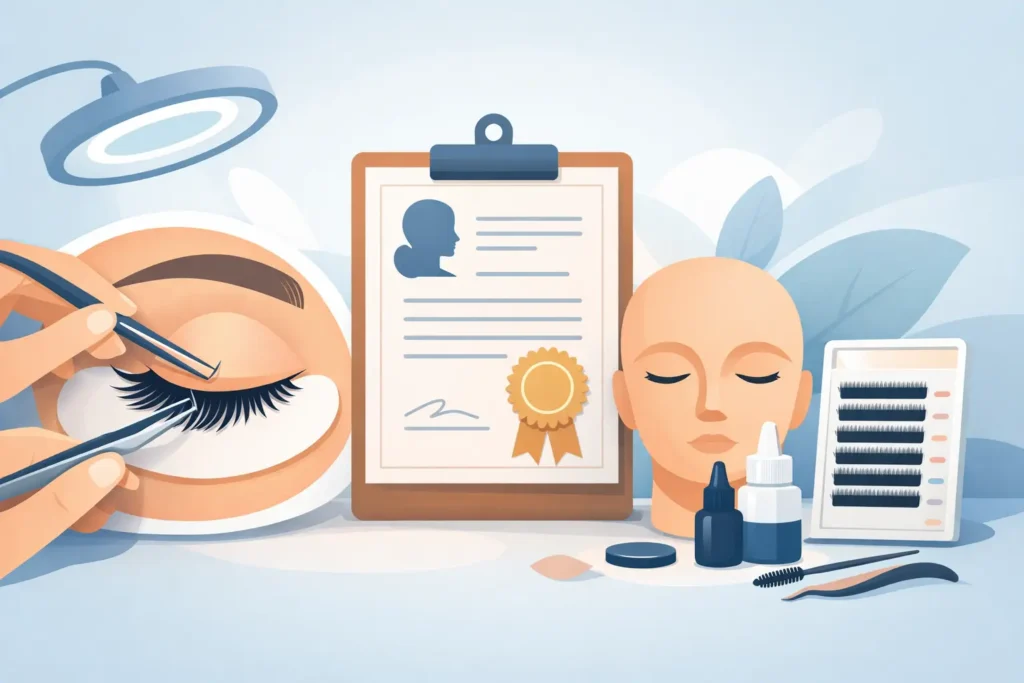
A beautiful lash set may take two hours to create, but a client will remember the entire experience: how comfortable they felt, how clearly you explained aftercare, and whether they trusted you around their eyes. An eyelash extension certification course should prepare you for all of that, not simply teach you how to attach extensions.
For aspiring beauty professionals, lash training can be a practical first step toward a client-facing career, a new specialty for an esthetics professional, or the foundation for a home-based or studio business. The right course gives you technical ability, sound safety habits, and the confidence to deliver a service clients want to book again.
What a Lash Certification Course Should Teach
Eyelash extensions are a precision service. Every appointment requires steady hands, attention to detail, sanitation, consultation skills, and a clear understanding of the products used near the eye area. A quality program balances theory with repeated practical application so students understand both the purpose behind each step and the pace required in a real appointment.
Training should begin with natural lash anatomy, the lash growth cycle, product knowledge, and sanitation procedures. You need to know why lash isolation matters, how adhesive conditions can affect retention, and why choosing an extension that is too heavy for a natural lash can create problems over time. These details separate a rushed application from professional work.
Students should also learn core styling principles. Eye shape, natural lash direction, density, curl, length, and a client’s desired look all influence the lash map. A dramatic style that photographs well on one client may not be comfortable, balanced, or appropriate for another. The goal is not to copy one popular look on everyone. It is to create a customized result that protects the natural lashes and suits the client.
Hands-On Practice Makes the Difference
Watching a demonstration is useful. Applying lashes yourself, correcting placement, and managing a full appointment is where learning becomes a usable skill.
Look for an eyelash extension certification course that includes supervised practical training. Early practice may start on mannequins or practice strips, where you can build control without the pressure of working around a client’s eyes. From there, practice with live models is especially valuable. It teaches you how to position a client comfortably, work with movement and different natural lash patterns, communicate during the service, and stay organized from consultation through cleanup.
Practical training also gives instructors an opportunity to identify habits that are hard to notice on your own. Perhaps your isolation needs to be cleaner, your adhesive amount is inconsistent, or your placement is too far from the lash line. Specific feedback helps you improve much faster than trying to learn only from online videos.
At Elite College of Business and Healthcare, practical beauty education is shaped by industry experience and hands-on learning environments, helping students build professional confidence before they begin serving clients independently.
Practice for quality, not only speed
New lash artists often focus on how long a full set takes. Speed matters eventually, especially when you are scheduling clients, but it should not come before safety and consistency. A course should help you develop an efficient workflow without encouraging shortcuts.
A strong full set has clean isolation, appropriate extension selection, secure attachment, and a polished finish. When you can complete those steps consistently, your timing will naturally improve with repetition. Clients would rather spend a little more time in the chair than leave with discomfort, poor retention, or lashes that do not match their expectations.
Safety Is Part of Your Professional Reputation
Lash extensions involve adhesives, tools, and close contact with a sensitive area. That is why sanitation and client screening belong at the center of training, not at the end of a lesson.
Your course should cover hygiene practices, workstation setup, tool disinfection, disposable supplies, adhesive handling, and proper product storage. It should also address consultation questions, informed consent, aftercare, and situations where a service should be postponed or declined. A responsible artist knows when redness, irritation, active eye concerns, recent procedures, or a reported sensitivity require extra caution or referral to an appropriate health professional.
It is equally important to understand the difference between a certification of course completion and a professional license. Requirements can vary by location and by the services you plan to offer. Before enrolling, check the rules that apply where you intend to work, including local health, business, insurance, and employer requirements. Training gives you a valuable skill set, but operating professionally also means following the standards that apply in your community.
Choose Training That Supports Your Career Goals
Not every student has the same destination. Some want to add classic lashes to an existing menu of facials, makeup, or spa services. Others hope to specialize in lash artistry and eventually offer fills, removals, lifts, brow services, or advanced styling. The best course for you depends on the services you want to provide and the level of support you need while building your confidence.
Before you enroll, ask how much practical time is included and whether you will receive instructor feedback on your work. Find out what type of certification is awarded, whether a starter kit or materials are included, and whether the curriculum covers classic, hybrid, volume, or specialty techniques. It is also worth asking whether the training includes client consultation, aftercare, pricing, photography, social media, and basic business practices.
Those business skills are not an extra. They are part of turning a technical service into a career. A talented artist still needs to explain services clearly, set expectations, handle bookings, maintain records, create a clean client experience, and encourage rebooking. For an aspiring entrepreneur, understanding costs and pricing is essential. Setting prices too low may attract attention at first, but it can make it difficult to purchase quality supplies, protect your time, and grow sustainably.
Certified instructors bring real-world context
A certified instructor can teach more than a sequence of steps. They can explain what commonly goes wrong in early appointments, how to troubleshoot retention concerns, and how to communicate with a client who wants a style that may not suit their natural lashes.
That real-world perspective matters because every set is different. Humidity, product use, lash condition, client lifestyle, and home care can all affect results. No course can promise perfect retention for every person, but thoughtful training helps you assess variables, educate clients honestly, and continue improving your technique.
Building Confidence After Certification
Certification is a beginning, not a finish line. The artists who build lasting client relationships continue practicing, documenting their work, reviewing their results, and staying current with professional standards.
After completing training, give yourself time to refine your process. Practice with models within your scope of training, take clear before-and-after photos with client permission, and ask for feedback about comfort, style, and retention. Create consistent consultation and aftercare procedures so every client receives the same level of attention.
You may also decide that your first role is in a salon, spa, or beauty studio rather than working independently right away. This can be a valuable route for gaining exposure to client service systems, scheduling, retail, and team expectations. Self-employment offers flexibility and independence, but it also requires you to manage marketing, supplies, taxes, insurance, policies, and every part of the customer experience. Neither path is automatically better. The right choice depends on your resources, confidence, and long-term goals.
A Skill That Can Grow With You
Lash artistry rewards patience, creativity, and professionalism. It can complement a broader esthetics career or become a focused specialty for someone who enjoys detailed, one-on-one beauty services. More than a certificate, meaningful training gives you a responsible foundation for serving clients with care.
Choose a program that lets you practice, ask questions, and learn from professionals who understand the expectations of the beauty industry. Your career starts with the decision to invest in skills you can use with confidence. Ready to begin your journey? Choose training that prepares you to create results clients can see and an experience they will want to return to.