
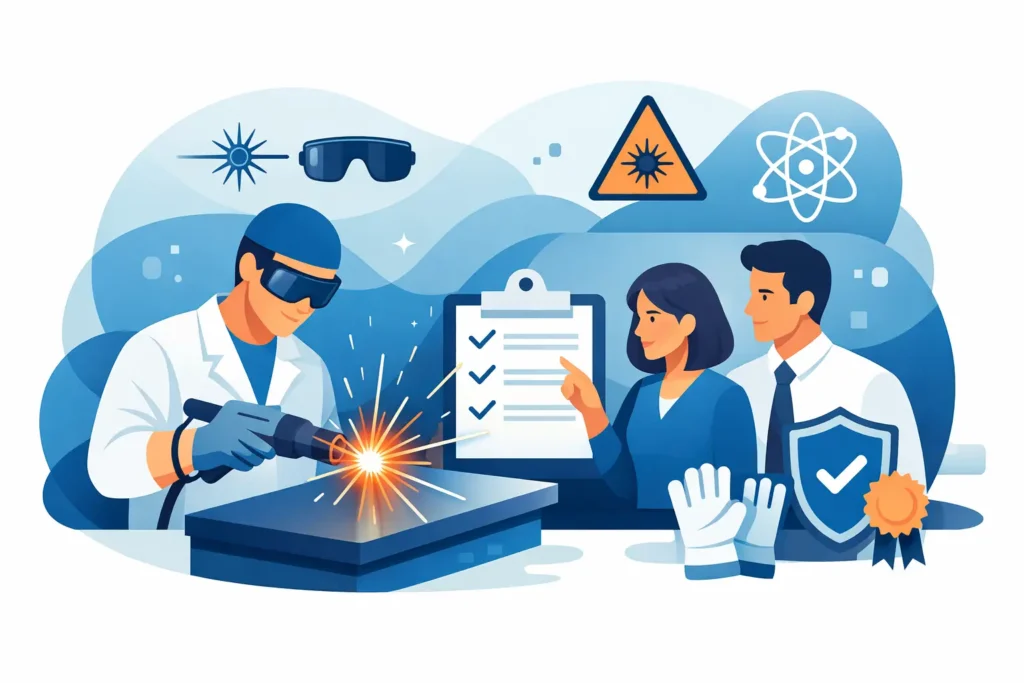
A laser device can create visible results for a client, but it also demands disciplined judgment from the professional holding it. That is why a guide to laser safety certification should begin with more than a checklist of credentials. For future laser technicians and medical esthetics professionals, safety training is the foundation for confident treatments, trusted client relationships, and a career built on responsible practice.
If you are considering a career in medical esthetics, learning how laser safety certification fits into your education can help you choose a program with the right balance of theory, supervised practice, and career preparation.
What Laser Safety Certification Means
Laser safety certification generally refers to education that teaches professionals how to use laser and light-based technology safely within their role and according to applicable workplace requirements. It may be offered through a school, equipment manufacturer, professional training provider, or industry organization. The exact credential, scope, and acceptance can differ by location, employer, device, and service setting.
That distinction matters. A certificate of training is not automatically the same as a professional license, medical authorization, or permission to perform every type of treatment. In many settings, laser and light-based services involve specific rules about supervision, delegation, device use, sanitation, consultation, documentation, and practitioner qualifications. A responsible graduate understands that training is essential, but also that local requirements and employer policies shape what they can do in practice.
For students, the goal is not simply to collect a certificate. It is to gain the knowledge and practical habits that make certification meaningful in a real workplace.
Why Safety Training Shapes Your Career
Clients may not know every technical setting on a device, but they recognize professionalism. They notice whether you conduct a careful consultation, ask relevant health questions, explain what to expect, use protective eyewear correctly, and respond calmly if a concern arises.
Those habits are career skills. Employers and clients look for professionals who can combine technical ability with thoughtful communication. A laser technician who understands treatment protocols but cannot identify a contraindication or explain aftercare clearly may not be ready for a client-facing role.
Safety education also supports long-term confidence. Laser technology evolves, and different devices have different operating procedures. Instead of relying on guesswork, trained professionals learn how to review protocols, ask appropriate questions, stay within their scope, and seek guidance when a treatment is not suitable.
A Guide to Laser Safety Certification: What You Should Learn
A strong laser safety curriculum should explain how laser and light-based devices interact with the skin, hair, and surrounding tissue. Students should learn the difference between common energy-based technologies and why wavelength, pulse duration, cooling methods, and treatment parameters affect both outcomes and risk.
Skin assessment is equally important. Future practitioners need to recognize how skin type, tanning, sun exposure, medications, health history, active skin conditions, and recent treatments can influence whether a procedure should be postponed, modified, or referred. This is where professional judgment matters more than rushing toward a treatment.
A career-focused program should also cover protective procedures. That includes selecting and checking appropriate eyewear, preparing the treatment space, following infection-control and sanitation practices, reviewing device instructions, documenting client information, and providing accurate pre- and post-treatment guidance.
Students should expect to learn about possible adverse reactions as well. Redness and temporary discomfort may be expected in some treatments, while burns, pigment changes, eye injuries, or other concerns require immediate, informed action. The purpose is not to create fear. It is to prepare professionals to prevent avoidable problems and respond appropriately when something does not go as planned.
Classroom Knowledge Is Only the Starting Point
Reading about safety procedures is valuable, but it is not the same as applying them while preparing a real treatment room. A student may understand the purpose of protective eyewear in theory, yet practical training teaches them how to make that step automatic before a device is activated.
Hands-on learning gives future professionals the opportunity to practice consultations, treatment setup, client positioning, sanitation, documentation, and communication under supervision. It also helps them develop a steady workflow. The details matter: confirming consent, reviewing a client record, checking equipment, setting expectations, and providing aftercare instructions should feel organized rather than rushed.
At Elite College of Business and Healthcare, students pursuing career training in laser technology and medical esthetics can build practical skills in an in-school learning environment with guidance from certified industry professionals. Supervised experience with models and clients helps students connect technical training with the professionalism expected in a busy esthetics setting.
How to Evaluate a Laser Technician Program
When comparing programs, look beyond phrases such as “certificate included” or “advanced training.” Ask what you will actually be taught, how much supervised practice is provided, and who will be teaching you. A meaningful program should be clear about the equipment, techniques, safety content, and practical expectations involved.
Consider asking these questions during admissions conversations:
- Does the curriculum cover laser physics, skin assessment, contraindications, and client consultation?
- Will I practice treatment-room safety, protective procedures, sanitation, documentation, and aftercare communication?
- Are instructors experienced, certified professionals who can explain both technical and client-service expectations?
- Will I have supervised hands-on opportunities with models or clients where appropriate?
- Does the program include career skills such as consultation, sales ethics, marketing, professionalism, and client retention?
The answers can reveal whether a program is designed only to introduce a device or to prepare you for the responsibilities of a professional role.
Certification Is Not a Substitute for Professional Judgment
There is no one credential that removes every decision from laser practice. Even after completing training, a practitioner must follow workplace protocols, use the specific equipment they have been trained to operate, and remain aware of their professional scope.
For example, a client may request a service they saw online or received elsewhere. A trained professional does not treat every request as automatically appropriate. They conduct a consultation, review relevant factors, explain realistic expectations, and know when to decline, defer, or seek further direction.
This approach protects clients and strengthens your reputation. In medical esthetics, trust is earned through consistency. Clients return when they feel heard, informed, and cared for, not when they are promised results without a proper assessment.
Building the Skills Employers and Clients Remember
Laser safety education supports far more than technical compliance. It helps you develop the calm, polished presence that can set you apart during interviews and client consultations. You learn to communicate with confidence without making inappropriate claims, handle concerns professionally, and create an experience that feels both welcoming and well organized.
These skills are especially valuable for graduates who hope to work in medical spas, esthetics clinics, wellness settings, or eventually build an independent business. Technical knowledge gets you started, but client relations, business awareness, ethical communication, and dependable safety practices help sustain a career.
A program that includes practical training can also make the transition from student to professional less intimidating. You have already practiced the routines that new graduates often need time to develop: preparing for appointments, managing client comfort, maintaining a clean environment, and communicating before and after a service.
Prepare for Training Before Your First Class
You do not need prior laser experience to begin exploring this career path. You do need curiosity, attention to detail, and a genuine commitment to client care. Start by considering the kind of environment where you want to work and the services you want to learn. Then choose education that supports both your technical development and your professional goals.
Be ready to study anatomy and skin fundamentals, practice communication, accept instructor feedback, and follow procedures carefully. The students who grow fastest are often not those who try to appear perfect on day one. They are the ones who ask thoughtful questions, repeat the process until it becomes reliable, and take every supervised practice opportunity seriously.
Turn Safety Training Into Career Confidence
Laser safety certification can be an important part of your path into medical esthetics, but its real value comes from how you apply it. Look for training that treats safety as an everyday professional standard, not a brief lesson before operating equipment.
Your next career can begin with a classroom, a treatment room, and the decision to train with purpose. If you are ready to build hands-on skills, learn from experienced professionals, and prepare for a client-focused future in medical esthetics or laser technology, apply today and begin your journey with confidence.