
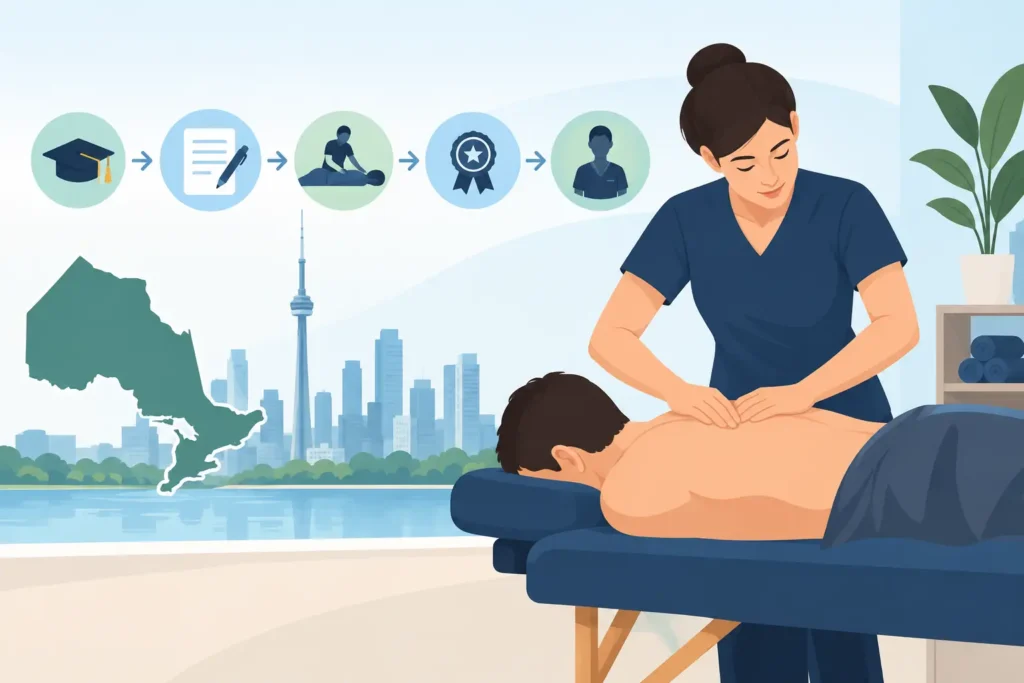
A career in massage therapy is built with more than a caring attitude and strong hands. If you are researching how to become an RMT in Ontario, you are preparing for a regulated healthcare career that requires focused education, practical assessment skills, professional judgment, and registration before you can use the RMT title.
That standard is good news for committed students. It means your training can lead to work that is respected by clients, employers, clinics, and other healthcare professionals. The path takes dedication, but every stage has a purpose: learning the science, developing reliable hands-on techniques, passing certification requirements, and entering practice with confidence.
1. Understand What an RMT Career Requires
An RMT, or Registered Massage Therapist, is a regulated health professional in Ontario. Massage therapy is not simply about helping someone relax after a long week. RMTs assess clients, create treatment plans, apply appropriate techniques, document care, communicate professionally, and recognize when a client should be referred to another healthcare provider.
This is a career for people who enjoy working one-on-one, want to combine wellness with healthcare knowledge, and are prepared to keep learning. Your day may include helping an office worker manage persistent neck discomfort, supporting an athlete’s recovery plan, or providing care to a client whose mobility has changed after an injury. Every client brings different goals, health histories, comfort levels, and expectations.
The work can be physically demanding, and successful therapists must protect their own body mechanics as carefully as they support their clients. It also requires emotional maturity. You will need to set boundaries, obtain informed consent, maintain confidentiality, and communicate clearly in situations where clients may be in pain or feeling vulnerable.
2. Choose a Massage Therapy Program Recognized in Ontario
The most significant decision in your journey is selecting a massage therapy diploma program that meets Ontario’s educational expectations for registration. To become eligible for registration, graduates must complete an approved or recognized massage therapy education program and meet the College of Massage Therapists of Ontario’s current requirements.
When comparing schools, look beyond a course list. Ask how much supervised practical training students receive, how anatomy and assessment are taught, whether instructors have relevant industry credentials, and how students are evaluated before graduation. A strong program should develop both clinical thinking and technical ability.
Hands-on education matters because massage therapy is a client-facing profession. Reading about palpation, range-of-motion testing, draping, or treatment planning is not the same as practicing those skills with feedback from an experienced instructor. Students should have opportunities to work with varied body types, client concerns, and treatment scenarios in a professional learning environment.
At Elite College of Business and Healthcare, the Registered Massage Therapy program is designed around practical skill development, career-oriented training, and instruction from certified professionals. Students can build the confidence to communicate with clients, apply techniques thoughtfully, and approach their future profession with a service mindset. For students in the Markham area, training close to home can also make it easier to stay consistent with a demanding program schedule.
3. Build the Clinical Knowledge Behind Every Treatment
Massage therapy education is detailed for a reason. Before you can make informed treatment decisions, you need to understand how the body functions and how different systems connect. Your coursework will typically cover anatomy, physiology, pathology, kinesiology, hydrotherapy, professional ethics, assessment, and massage theory and techniques.
The goal is not to memorize a list of muscles for an exam and forget them later. You need to connect what you learn to the person on your table. If a client reports shoulder pain, for example, you need to ask the right questions, identify possible contributing factors within your scope, select safe techniques, monitor the client’s response, and record what happened during the appointment.
Business and client-relations skills deserve attention, too. Many RMTs eventually work in independent practice, rent space in a clinic, or combine employment with a growing personal client base. Professional communication, scheduling, retention, marketing, documentation, and practice management can have a real effect on your long-term career options.
4. Treat Practical Training Like Your Career Rehearsal
Your practical classes are where knowledge becomes professional ability. This is the time to slow down, ask questions, make corrections, and practice until key skills become consistent. Students learn how to welcome clients, complete health histories, explain treatment plans, position clients properly, use safe body mechanics, and adapt care based on client feedback.
Realistic practice is especially valuable because client care is never one-size-fits-all. Some people prefer lighter pressure. Others may be nervous during a first appointment or have health information that requires changes to a planned treatment. Learning under supervision helps you develop the judgment to respond professionally rather than relying on a memorized routine.
A practical training environment with models or clients, where applicable and appropriately supervised, can also help students become more comfortable with the pace and expectations of a professional setting. You are not only developing your technique. You are developing presence, confidence, time management, and the ability to make each client feel respected.
Do not judge your progress only by whether a technique feels easy. Pay attention to your assessment process, your documentation, your communication, and your ability to explain why you chose a treatment approach. Those are the habits that support safe, credible practice after graduation.
5. Complete Ontario’s Certification and Registration Steps
After completing your education, you must meet the registration requirements set by the College of Massage Therapists of Ontario before practicing as an RMT. This typically includes successfully completing the required certification examinations and submitting a registration application with the required documents, fees, and declarations.
Ontario’s certification process evaluates both knowledge and practical competence. You should expect to demonstrate that you understand professional standards, can assess and treat safely, communicate effectively, and make appropriate clinical decisions. Requirements and processes can change, so always review the regulator’s current information as you approach graduation.
Registration is not a formality. It confirms that you have met the standards to enter a profession that serves the public. Once registered, you must continue to follow professional obligations, including maintaining competence, keeping appropriate records, and carrying professional liability insurance as required for your practice.
This stage can feel intimidating, particularly when exams are approaching. The best preparation begins much earlier than your final weeks of school. Attend practical sessions consistently, practice assessments aloud, seek feedback, review clinical reasoning, and take every supervised treatment seriously. Confidence grows from repetition guided by high standards.
6. Plan the Career You Want to Build After Registration
Registered Massage Therapists can work in multidisciplinary clinics, wellness centers, rehabilitation settings, spas, sports environments, or independent practices. The right direction depends on your interests, work style, and financial goals. Some graduates prefer the structure and mentorship of joining an established clinic. Others are motivated by the flexibility and responsibility of self-employment.
There are trade-offs. Independent practice can offer control over your schedule and brand, but it also requires you to manage bookings, finances, client acquisition, and administration. Clinic work may provide an existing client flow and collaborative environment, although you may have less control over your schedule or service model. Your first role does not have to determine your entire future.
As you start your career, be known for the fundamentals: thoughtful assessments, clean and organized treatment spaces, respectful communication, clear consent, dependable documentation, and a genuine commitment to each client’s goals. Technical skill opens the door, but trust is what brings clients back and helps a career grow.
Ready to Begin Your RMT Journey?
The route to registration takes effort, but it is a practical investment in a career where your skills can make a daily difference. Choose training that challenges you, gives you meaningful hands-on experience, and helps you practice like a future professional from the beginning. If you are ready to turn an interest in health and wellness into a career path, explore Registered Massage Therapy training at Elite College of Business and Healthcare and take the first focused step toward your future. Your career starts with the decision to prepare for it well.