
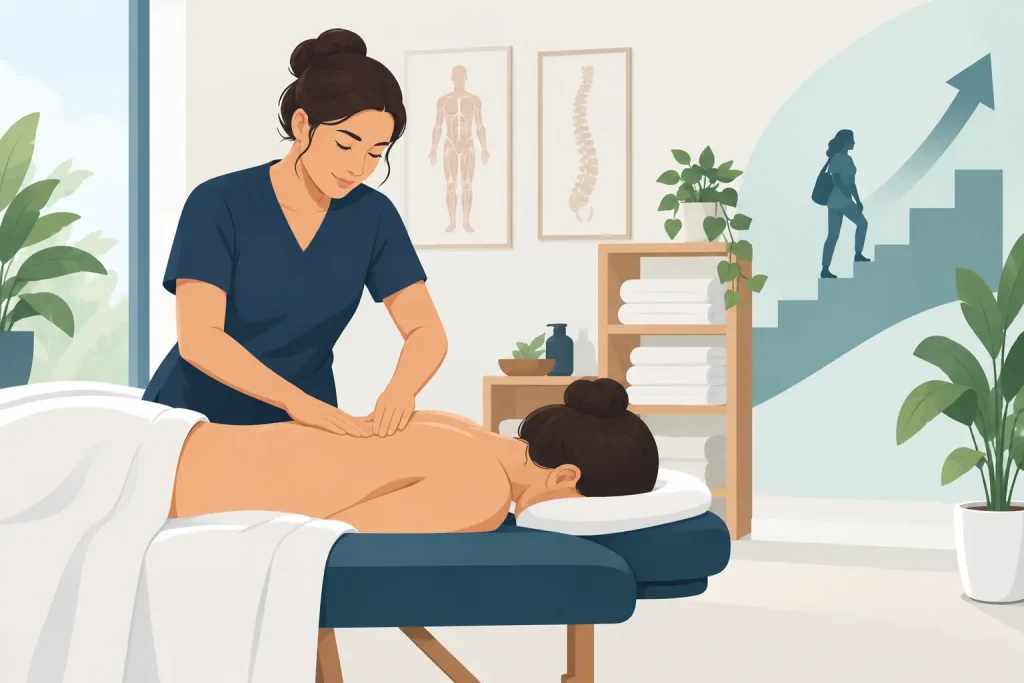
A career in massage therapy asks for more than an interest in wellness. It asks for trained hands, sound clinical judgment, professional communication, and the confidence to make each client feel respected and cared for. The right massage therapy school helps you build those abilities through focused education and repeated practical experience, not theory alone.
For students who are ready for a career change, returning to school, or looking for a profession built around meaningful client care, Registered Massage Therapy can offer a clear direction. At Elite College of Business and Healthcare, the focus is on helping future practitioners develop the practical skills and professional mindset needed to move forward with confidence.
What a Massage Therapy School Should Teach You
Massage therapy education is not simply about learning a set of techniques. A strong program should help you understand why a treatment approach may be appropriate, how to work safely, how to assess client needs, and when a client may need to be referred to another healthcare professional.
Your training should cover the foundations that support responsible, client-centered practice. This includes anatomy, physiology, pathology, ethics, assessment methods, therapeutic techniques, treatment planning, documentation, and professional communication. These subjects work together. Knowing anatomy matters, but so does knowing how to explain a treatment plan clearly and create an environment where a client feels at ease.
A career-oriented Registered Massage Therapy program also prepares you for the realities of working with people. Clients arrive with different goals, comfort levels, health histories, and expectations. Learning to listen carefully, ask appropriate questions, maintain boundaries, and adapt your approach is part of becoming a trusted professional.
Hands-On Practice Is Where Confidence Develops
Reading about muscle groups is useful. Learning how tissue responds to touch, pressure, movement, and treatment positioning requires supervised practice. That is why hands-on training should be central to your decision when comparing massage therapy school options.
At Elite College of Business and Healthcare, students learn in an in-school practical environment guided by certified industry professionals. Practical training gives students opportunities to apply classroom knowledge, refine their technique, and receive feedback while they are still learning. This process can make the difference between memorizing a method and understanding how to use it professionally.
Working with real models and clients under appropriate supervision adds another important layer. It helps students practice client intake, treatment flow, draping, communication, and aftercare recommendations in a setting that feels closer to the workplace. Early sessions may feel challenging, and that is normal. Repetition, instructor guidance, and constructive feedback help replace uncertainty with confidence.
Technical Skill Needs Professional Presence
Clients do not only remember whether a treatment felt effective. They remember whether they felt heard, comfortable, and respected. Professional presence is built through small but essential habits: preparing the treatment space, explaining what will happen, checking in during the session, observing hygiene practices, and documenting care appropriately.
These skills are especially valuable for students who plan to work in clinics, wellness settings, multidisciplinary environments, or eventually in their own practice. The ability to connect with clients while maintaining clear professional standards supports both client satisfaction and long-term career growth.
Choose Training That Looks Beyond Graduation
A diploma is an important milestone, but career preparation should not end with course content. The most useful training programs recognize that graduates need to understand how a professional practice operates.
That is why business, communication, client relations, marketing, management, and entrepreneurship matter. Not every graduate will choose self-employment, and career paths vary based on individual goals. Still, understanding scheduling, client retention, professional reputation, and service communication can help you make informed choices wherever your career takes you.
For example, a graduate interested in joining an established clinic may benefit from strong interviewing and client-communication skills. Someone who hopes to build an independent practice may need a stronger understanding of business planning and relationship building. The path depends on you, but practical career education gives you more options to consider.
Questions to Ask Before You Enroll
Choosing a school is a major decision, so look past broad promises. Ask how often students practice, who leads practical instruction, and how feedback is delivered. Find out whether the learning environment reflects the expectations of a professional treatment setting.
You should also ask how the curriculum balances academic knowledge and hands-on application. A program with practical training is valuable, but the quality of that experience matters. Are students receiving individual guidance? Do they learn how to manage a complete client experience, from intake through aftercare? Are communication and workplace readiness treated as core skills rather than extras?
It is also wise to discuss admissions, scheduling, tuition, financial aid guidance, and program requirements with an admissions representative. Each student has different circumstances. A clear conversation can help you understand the commitment involved and determine whether the program fits your timeline and career plans.
Your Career Can Start With a Clearer Plan
Many people consider massage therapy because they want a more personal, rewarding career. They may be tired of work that feels disconnected from people, or they may want a profession where their effort produces visible value for clients. Those are valid reasons to explore this field, but motivation becomes more powerful when it is paired with structured training.
A supportive learning environment can help you take the next step even if you have been away from school for years. You do not need to arrive with every answer. You need the willingness to learn, practice, accept feedback, and develop the discipline that professional healthcare and wellness careers require.
Elite College of Business and Healthcare welcomes students who are ready to build practical skills for a new direction. With hands-on learning, instruction from certified professionals, and training that supports both technical ability and career readiness, students can focus on becoming capable, prepared practitioners.
Build Skills That Clients Can Trust
Massage therapy can be a rewarding path for people who value care, communication, and continuous learning. It also requires commitment. Developing safe technique, understanding the body, and building professional confidence takes time and practice. The right education makes that commitment feel purposeful by giving you structured opportunities to learn from experienced instructors and apply your knowledge in practical settings.
If you are comparing your next steps, choose a program that prepares you for more than the classroom. Choose training that helps you develop the hands-on ability, client-care habits, and career-focused perspective needed to begin with confidence. Ready to begin your journey? Apply today and turn your interest in massage therapy into a career you can grow with.